
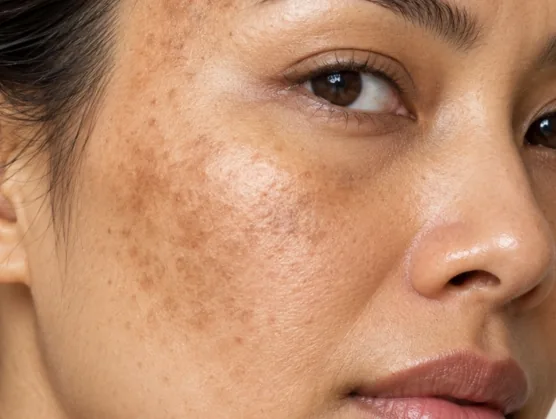
What is pigmentation, melasma & uneven skin tone?
Pigmentation occurs when melanin, the pigment responsible for skin colour, is produced or distributed unevenly.
Common concerns include melasma, sunspots, freckles, post-inflammatory hyperpigmentation and uneven skin tone.
When should you be assessed?
- Persistent dark spots or uneven skin tone
- Melasma or recurring pigmentation
- Pigmentation that becomes more noticeable over time
- Post-acne marks that take time to fade
- Skin discolouration affecting your overall complexion
- Pigmentation that has not improved with regular skincare
New, changing or suspicious pigmented lesions should be medically evaluated before cosmetic treatment.
How is it assessed?
- Skin and pigmentation assessment
- Identification of pigmentation type and possible triggers
- Evaluation of skin sensitivity and condition
- Review of skincare routine and previous treatments
- Personalised treatment planning
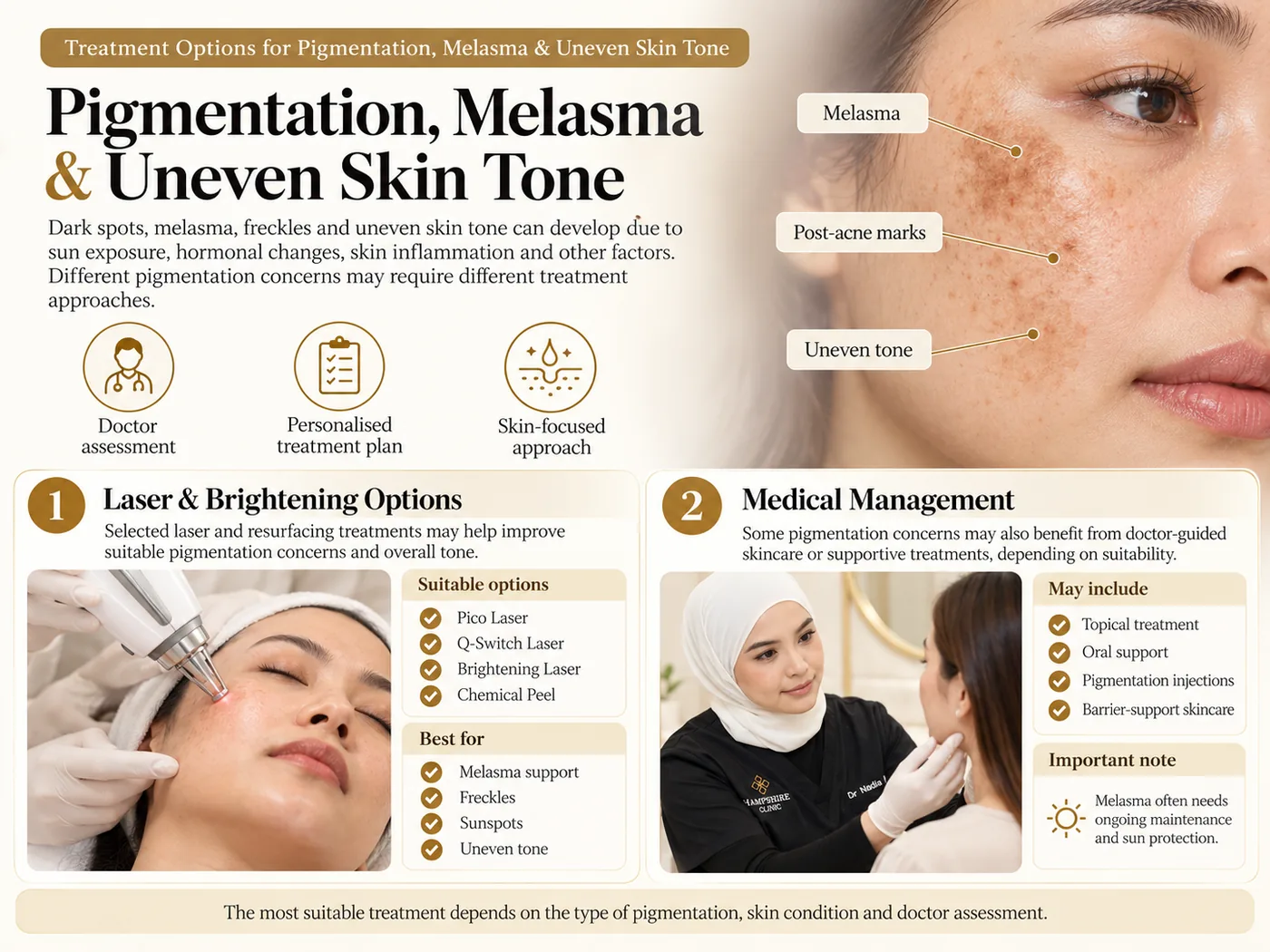
Treatment options
Depending on the type and depth of pigmentation, your doctor may recommend:
- Pico Laser – Targets selected pigmentation concerns
- Q-Switch Laser – Addresses suitable pigmented lesions
- Brightening Laser – Supports a more even-looking complexion
- Chemical Peel – Helps improve superficial pigmentation
- Pigmentation Treatments – Selected topical, oral or injectable options when medically appropriate
Treatment selection depends on pigmentation type, skin condition and individual suitability. Melasma often requires ongoing management, sun protection and careful treatment selection.
Arrange a consultation
Understand your pigmentation concerns and explore suitable treatment options with our doctors.
Treatment selection depends on diagnosis and suitability. Not every listed treatment is appropriate for every patient.