What is acne & scarring?
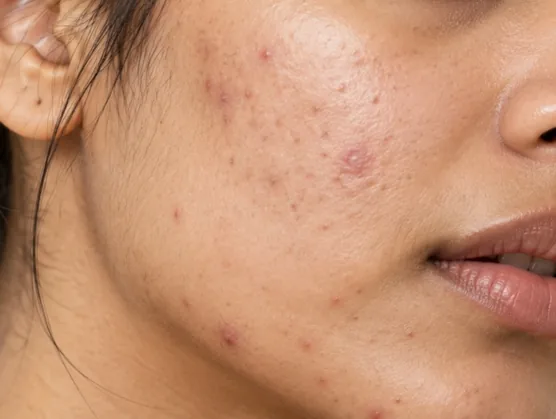
Acne is a common skin condition that develops when hair follicles become clogged with oil and dead skin cells, sometimes leading to inflammation.
Acne may leave behind temporary redness, dark marks or permanent scarring that affects skin texture.
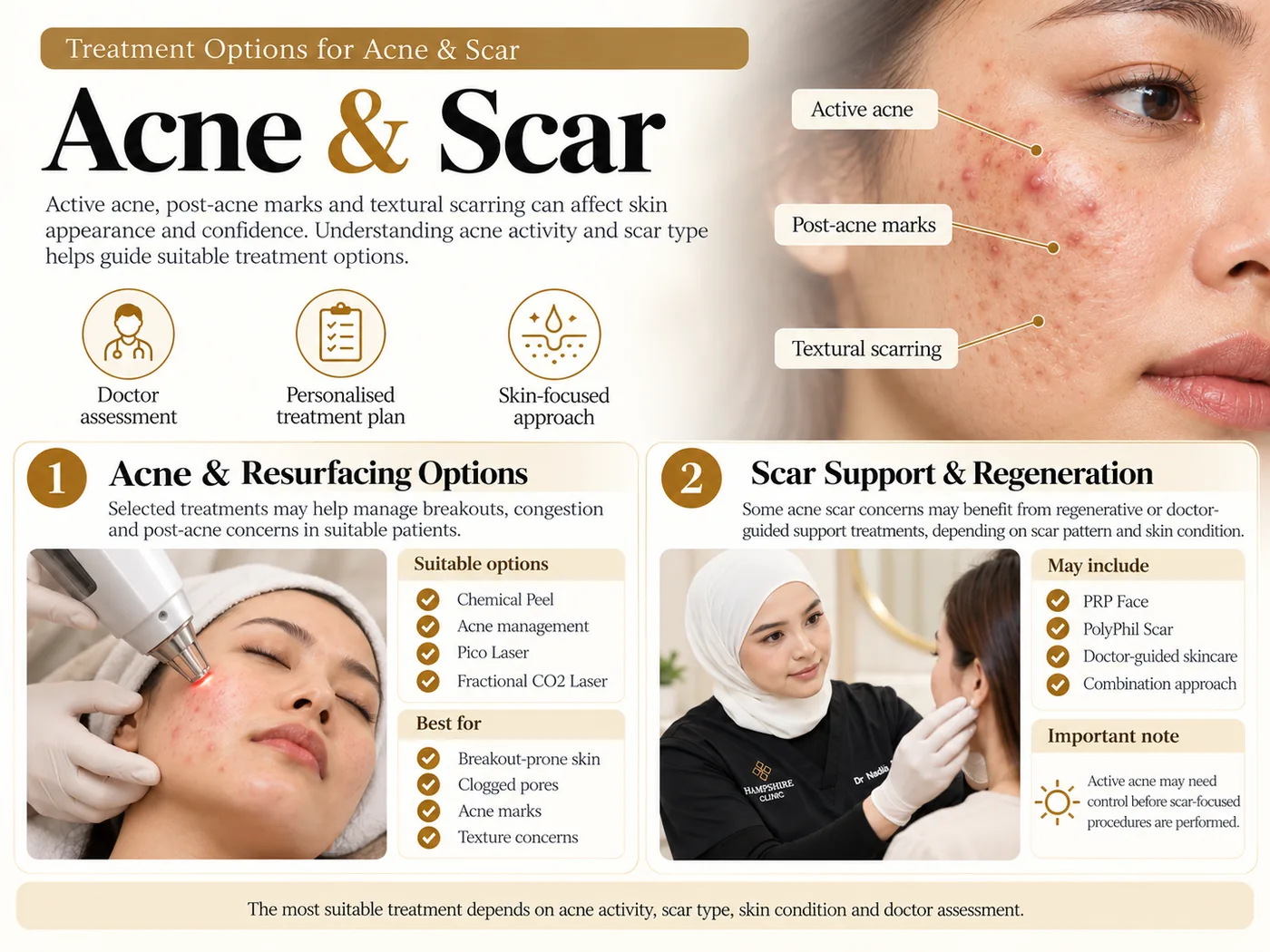
Common scar types include ice pick, boxcar and rolling scars.
When should you be assessed?
- Frequent or persistent acne breakouts
- Painful, inflamed or cystic acne
- Acne that leaves dark marks or redness
- Visible acne scars or uneven skin texture
- Enlarged or congested pores
- Acne that has not improved with regular skincare
- Recurring breakouts affecting confidence
How is it assessed?
- Acne type and severity assessment
- Evaluation of skin inflammation and sensitivity
- Identification of acne scar types and depth
- Review of previous treatments and skincare routine
- Assessment of possible contributing factors
- Personalised acne management planning
Treatment options
Depending on whether the main concern is active acne, pigmentation or scarring, your doctor may recommend:
- Chemical Peel – Helps manage selected acne, congestion and superficial skin concerns
- Acne Management Treatments – Doctor-guided treatment for active breakouts
- Fractional CO2 Laser – Improves selected acne scars and uneven skin texture
- Pico Laser – Addresses suitable post-acne pigmentation and texture concerns
- PRP Face Treatment – May be considered as a supportive treatment alongside selected procedures
- PolyPhil Scar – May be considered for selected scar concerns
- Doctor-Prescribed Acne Treatments – Topical or oral medication where clinically indicated
Treatment depends on acne severity, scar type and skin condition. Active acne may need to be managed before undergoing scar-focused procedures.
Arrange a consultation
Understand your acne and scarring concerns and explore suitable treatment options for your skin.
Treatment selection depends on diagnosis and suitability. Not every listed treatment is appropriate for every patient.