

What is hair loss?
Hair loss, also known as alopecia, refers to excessive hair shedding, thinning or loss of hair from the scalp or other areas.
Common patterns include hereditary hair thinning, temporary shedding related to stress or illness, and hair loss associated with hormonal or scalp conditions.
When should you be assessed?
- Increased hair shedding
- Noticeable hair thinning or reduced density
- Widening hair parting
- Receding hairline
- Patchy hair loss
- Hair loss following significant stress or illness
- Persistent scalp irritation, scaling or inflammation
How is it assessed?
- Hair and scalp examination
- Assessment of hair loss pattern and severity
- Review of medical and family history
- Evaluation of potential hormonal, nutritional or lifestyle contributors
- Further investigations or referral where clinically indicated
- Personalised hair management planning
Treatment options
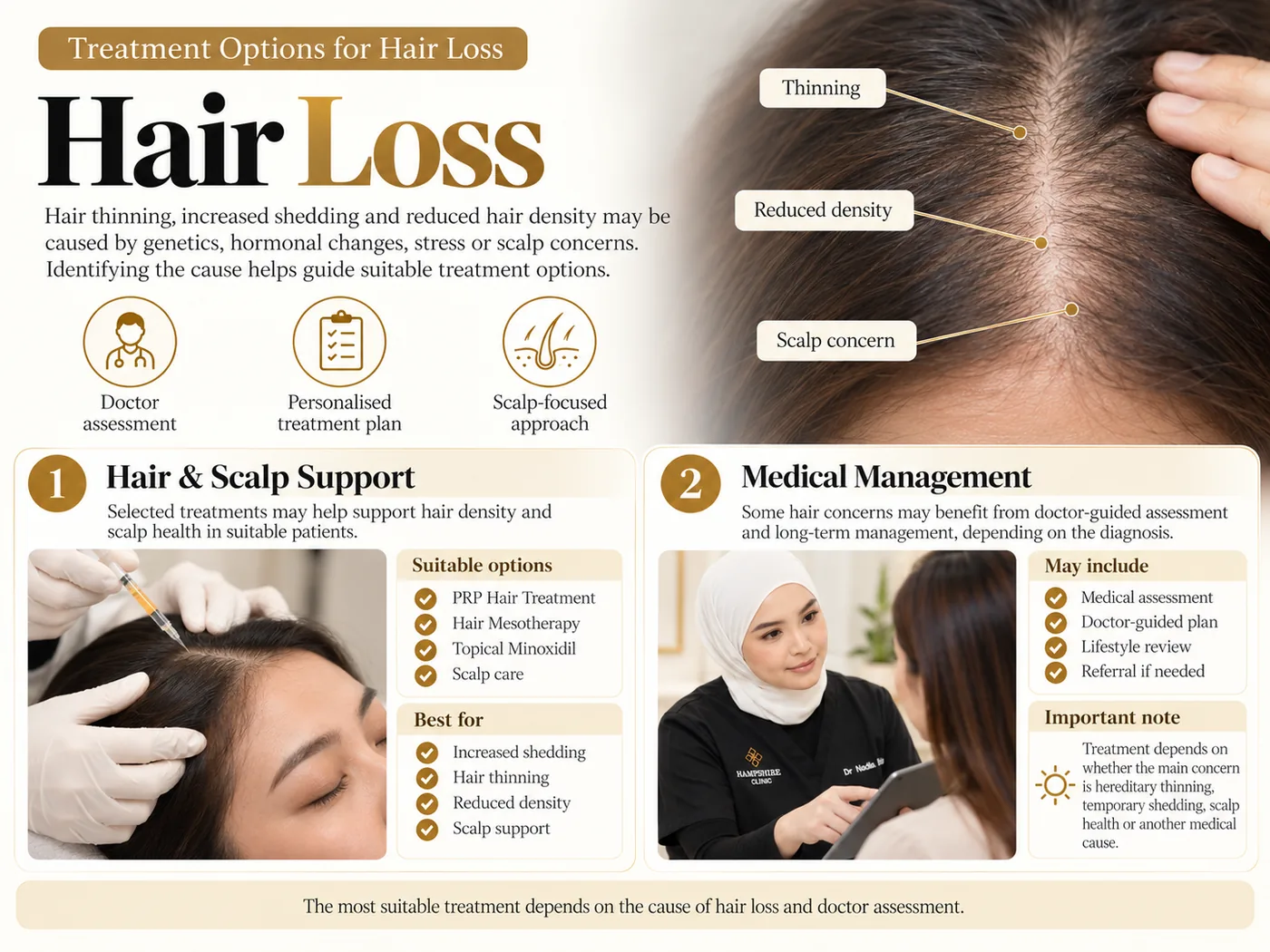
Depending on the cause and type of hair loss, your doctor may recommend:
- PRP Hair Treatment – Platelet-rich plasma treatment that may support hair density in selected hair loss conditions
- Hair Mesotherapy – May be considered as an adjunctive treatment in selected cases, with benefits depending on the formulation and diagnosis
- Topical Minoxidil – Evidence-based treatment for certain types of hair loss when medically appropriate
- Doctor-Guided Hair Loss Treatments – Medical management based on the underlying condition
- Scalp Care & Management – Supports scalp health where relevant
- Referral for Specialist Treatment – Where additional investigations or specialist care are needed
Treatment depends on whether the main concern is hereditary thinning, temporary shedding, hormonal changes, scalp health or another medical cause.
Some forms of hair loss require medical treatment rather than aesthetic procedures alone.
Arrange a consultation
Understand the possible causes of your hair loss and explore suitable hair and scalp management options.
Treatment selection depends on diagnosis and suitability. Not every listed treatment is appropriate for every patient.